Why isolated AI pilots do not add up
Four pilots working in isolation do not add up to results. With the TWINE framework, you decide upfront where AI really pays off in your business.
In 2025, 45% of businesses in the Netherlands with 50 to 249 employees used at least one AI technology. Worldwide, 5% of businesses derive value from it at scale.
Together, those two figures describe the problem. It is not that businesses do too little with AI. It is that they do too many isolated things that do not add up.
“Can we use AI for this?” is the wrong question
The pattern is familiar by now. Marketing tests a content tool. Finance tries something with invoice recognition. Someone in sales builds a chatbot over the weekend. All three work. None of the three changes the figures.
That comes down to the question that preceded them. “Can we use AI for this?” almost always produces a yes. So it filters out nothing. You get the application closest to the person who asked, not the application that delivers the most for your business.
Six months later, nobody can say exactly what it delivered. Not because it failed, but because no baseline was agreed beforehand. And because the three initiatives had no visibility into each other, they do not reinforce each other either.
The better question is: where in this business does AI deliver the most, and in what order do we build it?
Value only emerges when it runs through the layers
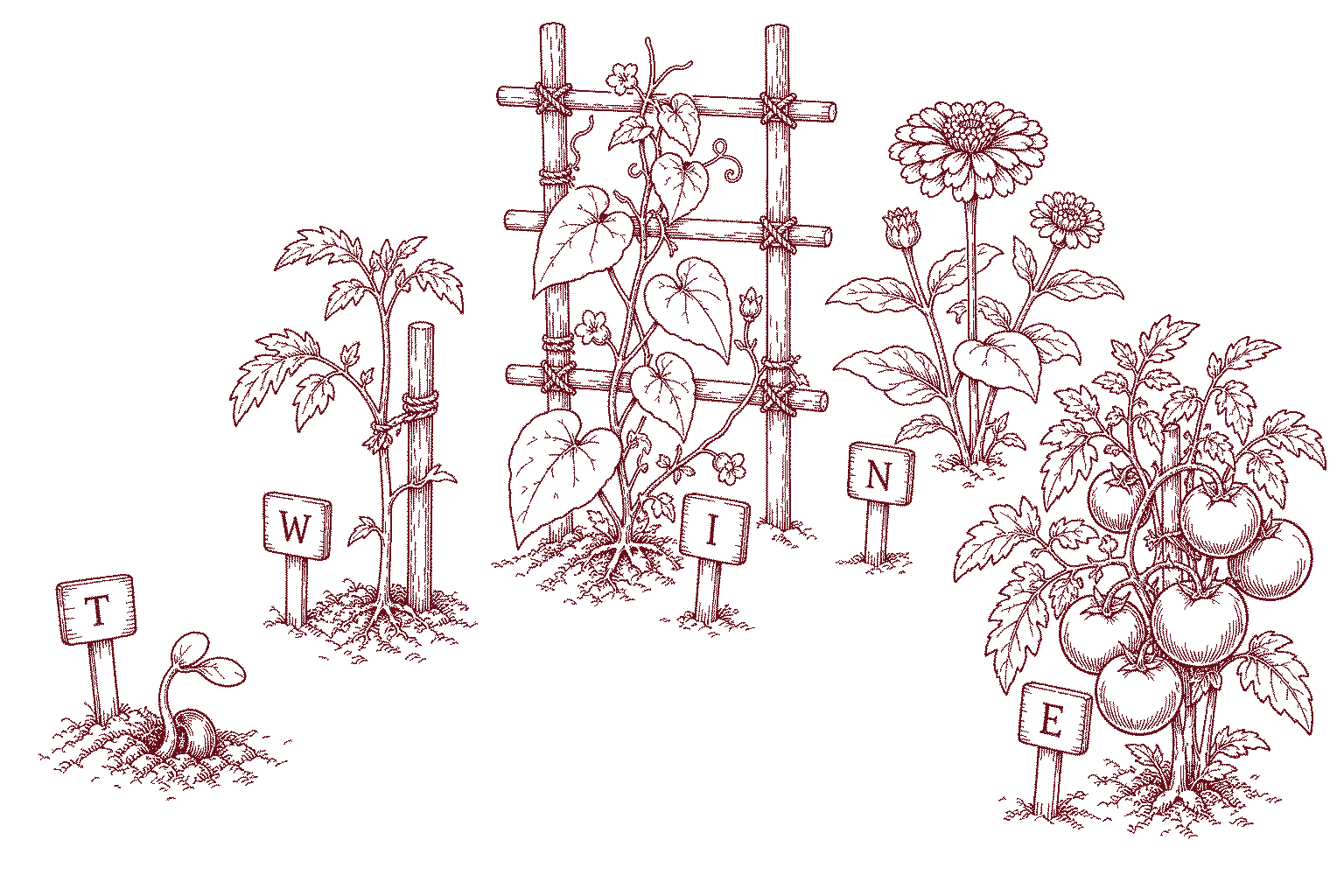
We built a framework for that and called it TWINE. The same name as the business, and that is no coincidence: en:twine means weaving threads together. Value emerges when AI runs through all layers of a business, rather than staying in one isolated application.
TWINE distinguishes five layers, and each layer is a different way AI creates value. Not every business needs all five, and there is no mandatory order. It is an analytical lens, not a step-by-step plan.
Transform
automates what you already do and removes the errors. The repetitive manual work your team redoes every week. Rarely the biggest gain, but it keeps everything above it clean.
Weave
connects what is disconnected. Systems that do not talk to each other, data that is half right in five places. AI is as good as the data it can reach, so this layer determines how far you get afterwards.
Innovate
builds what is missing or only now possible. Visibility in AI answers, a service that did not exist without AI, research your team never had the hours for.
Niche
defends what is yours. Your data, your expertise, your position, turned into an advantage a competitor cannot easily copy.
Expand
scales what already works. A way of working that has proven itself manually, but running ten times as often without ten times as many people. The chance of a return is greatest here, yet this layer is skipped most often.
Two conditions and three gates
Five layers quickly produce a long list of ideas. The real work lies in what you cross off afterwards. Two conditions apply to every initiative.
People
is about strengthening rather than replacing, and defining upfront what remains human work. AI projects only succeed through adoption, so the solution must fit how people work now.
Governance
means every initiative is safe, compliant, and logged from day one, rather than adding these things afterwards.
The remaining ideas then pass through three gates.
Kill
stops what is not promising. Data that cannot be made usable within the assignment, a decision requiring context AI cannot access, a process that changes every week. Saying no early protects everything else's chance of success.
Proof
requires a baseline on day one, recorded before the start. That upfront figure is the only real answer to the question you will get in six months: what was the ROI?
Risk
determines how much oversight is needed and in what order you build. Reversible, internal applications can go live sooner. For irreversible or client-facing decisions, human approval remains necessary.
This is exactly the step missing when three isolated pilots run side by side. Nobody weighed them against each other, so all three exist.
A framework, not a report
We also have an AI Readiness Scan. In ten minutes, it gives you a picture of where AI could help in your organisation. Useful as a starting point, and deliberately lightweight.
TWINE is different. It is neither a faster version of the scan nor a follow-up step, but a second, more substantial entry point. Where the scan identifies possibilities, TWINE sorts them: which initiatives are worthwhile, which fall away, and what you build first.
A TWINE session takes about ninety minutes. You bring someone who knows the business and someone who knows the systems. You leave with a prioritised roadmap of concrete initiatives, each with a layer, a scope, agreements on what people will continue doing, and a measurable goal. Not a wish list, but decisions.
Work through it yourself or together
The full framework is in the TWINE playbook: all five layers explained, the conditions and gates as checklists, two worked business examples, and a blank worksheet to fill in your own plan. You can work through it with your team yourself.
Prefer to do it together? You leave with a concrete roadmap, even if we do not work together afterwards. Email hello@en-twine.ai or first read how TWINE works.
A note on how this was made: our content is AI-assisted. We use AI for research and drafting a first concept. A human reviews and edits the text and takes responsibility for everything we publish. Read how we make our content.
Would you like to map this out for your own business?
The AI Readiness Scan takes 10 minutes and identifies which processes to tackle first, with an indication of ROI per use case.